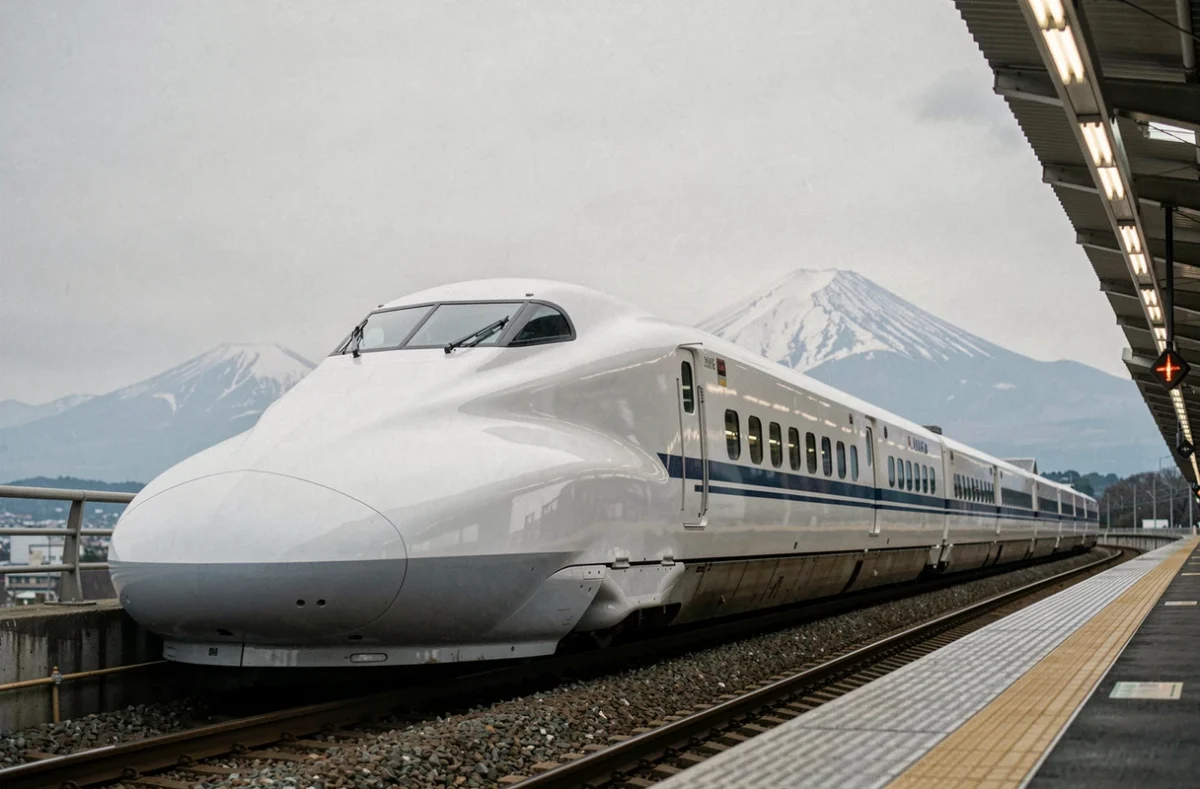
Tokyo–Osaka in just over two hours, Paris–Lyon in under two. On these two corridors, the Shinkansen and the TGV meet the same need: connecting two major cities quickly enough to make flying pointless. Comparing these two trains means weighing radically different choices in infrastructure, frequency and operating philosophy.
Shinkansen and TGV operating speeds: what passengers actually experience
Top speed and actual journey time are often confused. The Tōkaidō Shinkansen, the busiest line in Japan’s network, operates at a lower commercial speed than the TGV, which benefits from higher speed limits on its high-speed lines.
In day-to-day service, the TGV travels faster. The difference is a few dozen kilometres per hour, not a technological gulf.
The Shinkansen makes up for this gap in another way. During peak hours, a Tōkaidō train departs every few minutes. Missing a train costs almost nothing in waiting time, which shortens the door-to-door journey. A detailed analysis of Shinkansen and TGV speeds shows that reliability matters more than the advertised km/h in the passenger’s actual travel experience.
Rail speed records: TGV and maglev belong in separate categories
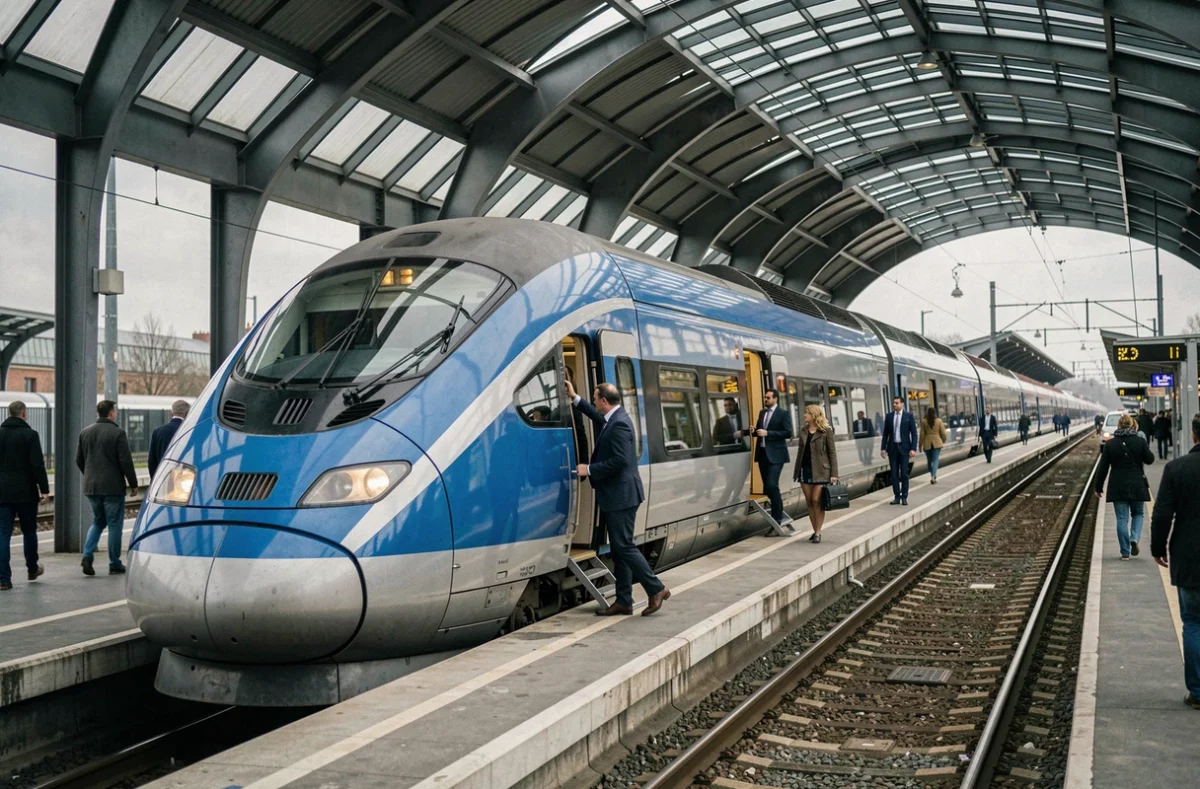
The rail speed record for conventional trains belongs to the TGV, achieved during tests on specially prepared track and overhead lines. No other train running on conventional steel wheels and rails has gone faster since.
When you read that Japan holds the absolute rail speed record, it refers to the SCMaglev, a magnetic levitation train. The maglev is not a conventional Shinkansen: there is no contact between the vehicle and the track, and the technology is radically different. Comparing its record with the TGV’s is like comparing a hovercraft with a cargo ship.
The conventional Shinkansen has never pursued pure speed records. The trainsets in service in Japan are designed to balance acceleration, braking and noise in densely populated urban areas.
Performance summary table
| Criterion | Shinkansen (Tōkaidō) | TGV (French high-speed lines) |
|---|---|---|
| Typical operating speed | Lower than the TGV | Higher than the Shinkansen |
| Test record (conventional rail) | Not pursued as an objective | World record on conventional rail (test) |
| Associated maglev technology | SCMaglev (Chūō Shinkansen project) | None |
Punctuality and reliability: where the Shinkansen changes the game
A fast train that racks up delays loses its time-saving advantage. On this measure, the Shinkansen sets a standard that Europe’s rail network struggles to match.
JR Central reports an average delay of 1.4 minutes per train in fiscal year 2024 for the Tōkaidō Shinkansen. This figure includes typhoons, earthquakes and snowstorms, all of which are common in Japan.
In France, the data are not published using the same criteria, making direct comparisons difficult. TGV delays stem from maintenance work, industrial action and technical incidents, all on a network shared with other services. The two systems are not being compared on an equal basis, but the difference in reliability is clear to anyone who has travelled on both.
What explains the difference in punctuality
- The Shinkansen runs on tracks reserved for high-speed trains, with no freight or regional trains crossing its path. Many causes of delays are eliminated as a result.
- Automatic earthquake protocols slow trains before the tremors reach the tracks, limiting prolonged stoppages.
- Preventive maintenance relies on regular overnight work windows: the network closes every night for inspections, whereas some French high-speed lines still carry late-night or early-morning services.

Shinkansen safety: no fatal accidents in six decades
Since 1964, the Shinkansen has recorded no deaths caused by a collision or derailment. No other rail network in the world can match that record over a comparable period.
The TGV also has an excellent safety record in normal service. Serious accidents in France have involved test runs or collisions with obstacles on sections without protective barriers.
The difference has less to do with onboard electronics than with the design of the network itself. The Shinkansen runs on infrastructure that is fenced off from end to end, with no level crossings and no shared sections. This physical separation eliminates most accident scenarios.
Shinkansen or TGV: two answers to opposing geographical constraints
Japan’s population is concentrated along a narrow coastal arc crossed by mountainous and seismic zones. The Shinkansen was designed for this challenging terrain: high frequency and resilience to natural hazards, at the expense of top speed.
France has long, sparsely populated plains between its major cities. Its high-speed lines make the most of this terrain to sustain higher cruising speeds over longer distances.
Ignoring this geographical reality distorts any comparison. The Shinkansen is not slower because of a technical limitation: its tight curves, frequent tunnels and closely spaced stops call for a different design compromise.
The TGV wins on pure speed. The Shinkansen comes out ahead on reliability, frequency and door-to-door journey time. Each system excels in the conditions it was designed for, and transplanting one into the other’s country would make no operational sense.