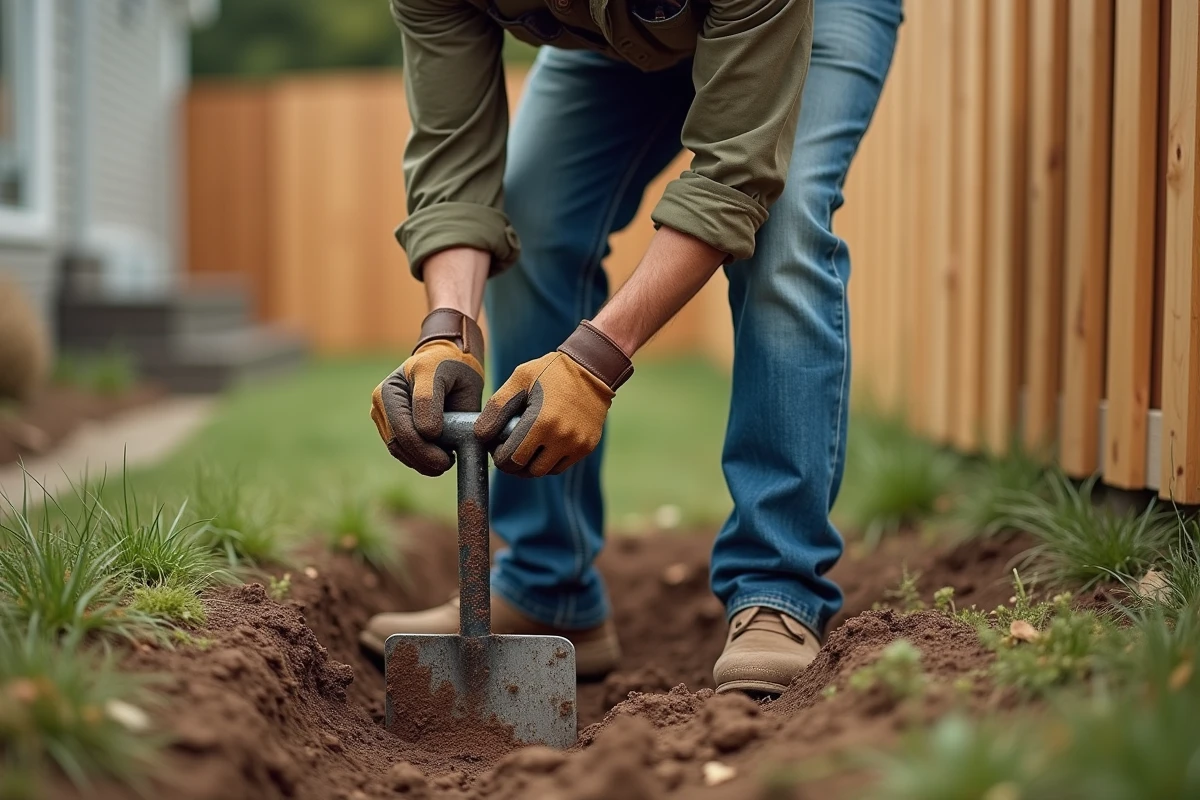
Digging a hole for a fence post may seem trivial, but the choice of tool and the nature of the soil drastically change the time spent on each hole. Between a standard spade, a post hole digger, and a power auger, the productivity gap ranges from simple to tenfold. This article compares digging methods according to soil type, details the dimensions to adhere to, and specifies the filling techniques that ensure a stable post over time.
Digging Time by Tool and Soil Type
The table below summarizes the productivity differences observed between the three most common tools, related to a standard hole for a fence post in three distinct soil types.
| Tool | Loose Soil (sandy, loamy) | Compact Clay Soil | Rocky or Stony Soil |
|---|---|---|---|
| Spade + Post Hole Digger | Fast, moderate effort | Slow, sustained effort | Very slow, frequent blockages |
| Manual Auger | Fast, consistent | Moderate, requires frequent emptying of the bit | Difficult, bit stuck by stones |
| Power Auger | Very fast | Fast, sufficient motor torque | Fast except for large rocky blocks |
The post hole digger (two hinged blades) remains the basic tool for a few holes in loose soil. As soon as the ground hardens or the number of posts exceeds ten, the auger takes the advantage.
Content creators specializing in construction and gardening emphasize a point rarely detailed in technical sheets: keeping the auger perfectly vertical during drilling is key to obtaining straight posts without subsequent correction. In clay soil, the bit tends to deviate if the operator does not maintain constant and centered pressure.
To understand in detail how to dig a hole for a fence post with an auger, mastering verticality is as important as the power of the tool.
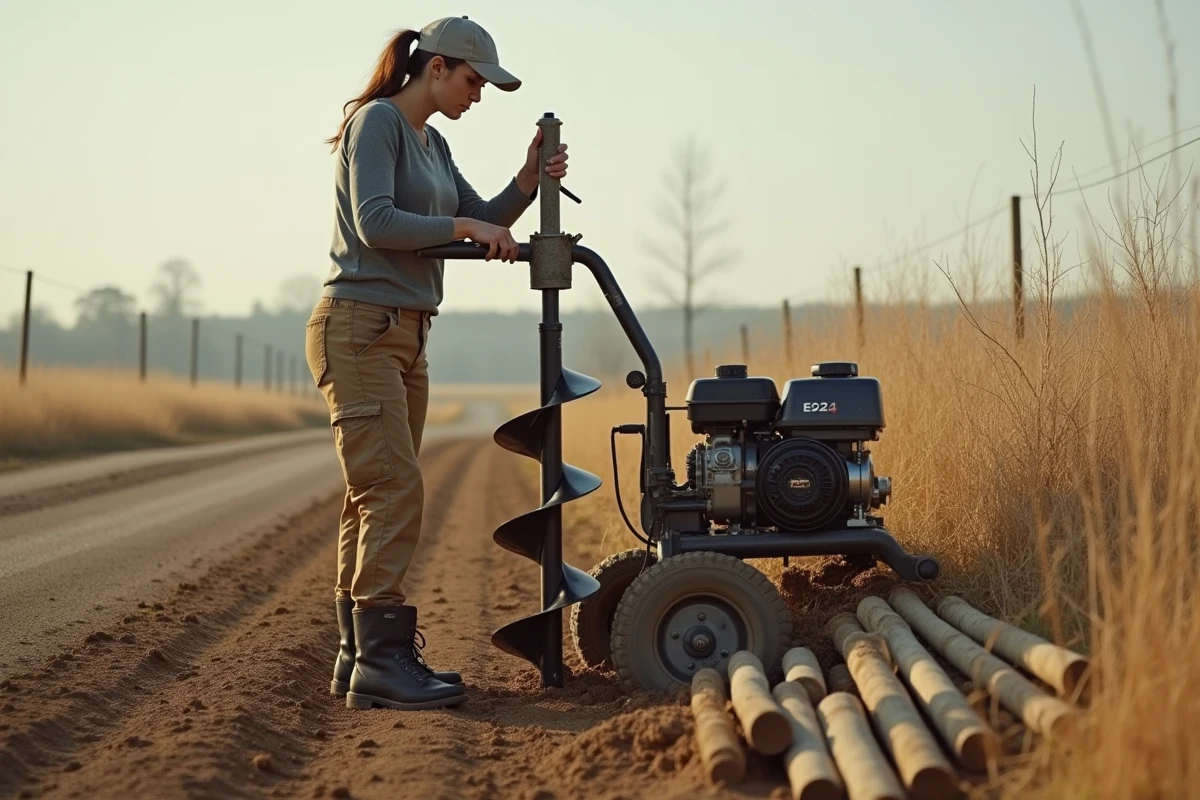
Diameter and Depth of the Hole: Two Measurements Not to Underestimate
The depth is calculated according to a simple rule: one third of the total length of the post must be buried. For a fence post intended to protrude about one meter above the ground, a sufficient portion must be driven in to keep the ratio between the visible part and the buried part close to two thirds / one third.
The diameter of the hole is the parameter that many guides overlook. Several landscaping professionals now recommend a straightforward rule: the diameter of the hole should be at least double the cross-section of the post. A small square wooden post thus requires a hole significantly wider than one might initially imagine.
This oversizing is not wasteful. It serves three concrete functions:
- Facilitating digging by allowing room for the tool, especially in clay soil where the auger bit sticks to the walls
- Allowing the adjustment of the post’s plumb with a level before the concrete sets
- Providing a sufficient volume of concrete or compacted earth to withstand lateral forces (wind, tension from the mesh or panels)
Specific Case of Waterlogged Soils
In wet ground, water rises in the hole as soon as it is dug. The most reliable solution is to lay a layer of draining gravel at the bottom before placing the post. This gravel bed prevents the wooden post’s base from stagnating in water and limits premature rotting.
Filling the Hole: Quick-Setting Concrete vs. Compacted Earth
Sealing with concrete remains the most common method for permanently securing a fence post. However, not all pouring techniques are equal.
Landscapers now recommend quick-setting concrete specially designed for posts, which allows for loading within a few tens of minutes instead of several hours with regular concrete. The time savings are significant when multiplying posts along a long fence.
The technical point that classic written guides often overlook concerns the filling method itself. Pouring concrete all at once into a deep hole traps air pockets that weaken the seal. The best practice is to fill the concrete in successive layers, compacting each layer with a stick or manual tamper. This simple action expels air and ensures uniform contact between the concrete and the post throughout the depth.

Alternative Without Concrete: Sealing with Compacted Earth
For a lightweight fence (soft mesh, small-section posts), sealing with earth may suffice. The excavated earth is replaced in layers, each layer being vigorously compacted. This method works well in clay soil, where the earth forms a compact block around the post after a few days.
In sandy soil, compacted earth offers significantly less stability. Concrete or quick-setting concrete remains the safest choice to prevent a post from leaning after the first storm.
Common Mistakes That Complicate Digging
Three mistakes consistently occur on fence construction sites, even among experienced DIYers:
- Not marking the alignment with a string line before digging, which forces repositioning of posts afterward and sometimes requires filling in poorly placed holes
- Using an auger bit that is too tight in diameter compared to the post’s cross-section, preventing any adjustment of plumb
- Neglecting to check for buried utilities (water, electricity, gas) before drilling, a reflex to have before any auger or spade strike
Marking the alignment beforehand with a string line takes a few minutes but saves hours of correction. Planting two temporary stakes at the ends of the future fence, stretching a line, and then marking each post location on the ground with a stake or a paint line is enough to ensure a clean alignment.
The type of soil dictates the tool, the diameter of the hole determines the stability of the post, and the layered filling method makes the difference between a durable seal and a post that will lean at the first gust of wind. These three parameters, measured before the first spade strike, transform a tedious job into a controlled operation.