In francophone Scrabble, two and three-letter words account for a disproportionate share of the points scored throughout a game. Among them, IN and GIN hold a special place: their presence in the Official Scrabble Dictionary (ODS 8) opens up combinations that many casual players overlook. Understanding their real value, placements, and the extensions they allow changes the way to approach the board.
Extensions and derivatives of GIN in ODS 8: an underutilized potential
Most Scrabble guides simply list GIN among the short words to know. What they often overlook is the range of derived forms that ODS 8 has made playable. GINS (plural), as well as conjugated forms like GINER or GINGUÉE, significantly expand the gameplay options around this trigram.
The tactical interest is direct: placing GIN on the board prepares for an extension on the next turn. Adding an S to form GINS at the end of a word, or extending towards GINGEMBRE if the draw allows, capitalizes on an already occupied position. Players who know the words in and gin in Scrabble have a clear advantage in managing their intermediate letters.
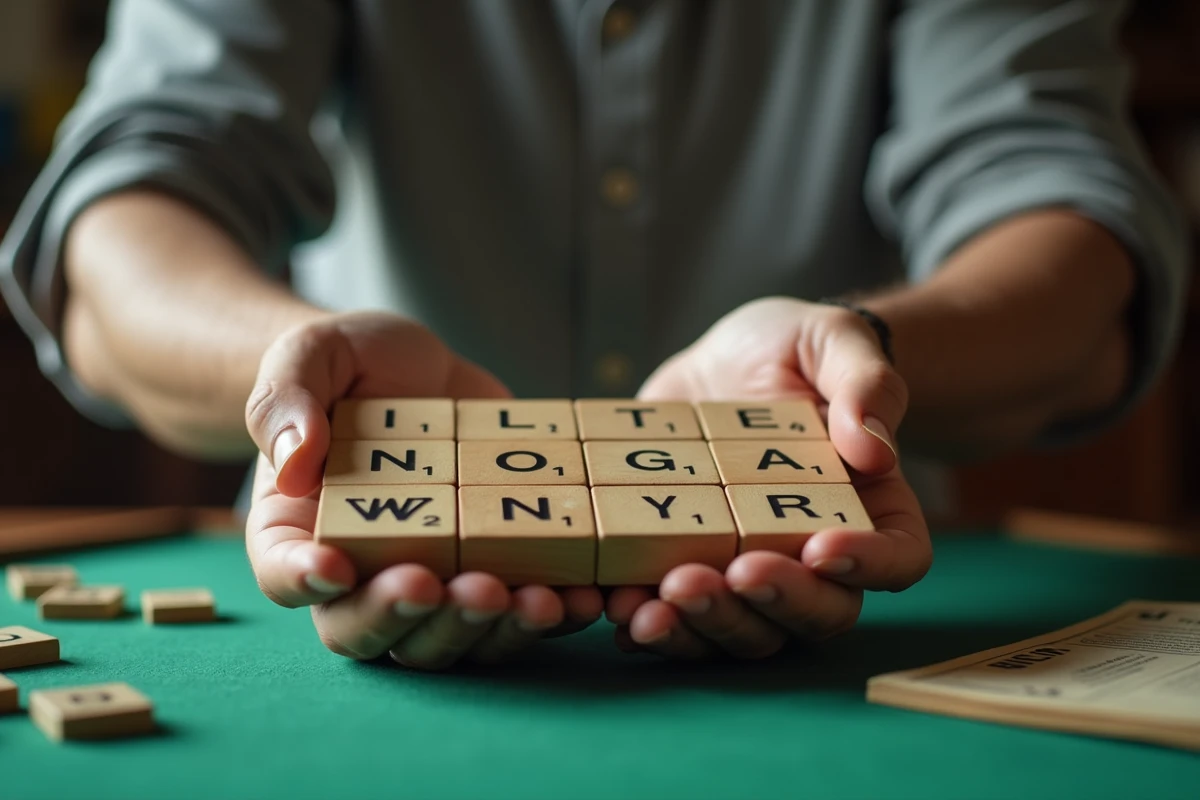
GIN is worth 4 raw points (G at 2, I at 1, N at 1). This modest score becomes more interesting when the word crosses a multiplier square or supports a longer perpendicular word.
IN in Scrabble: invariant adjective and crossing pivot
IN is accepted as a variable adjective meaning “in fashion”. This definition is important: invariability means there is no INE or INS form in the sense of this adjective. The word remains as is, which limits direct extensions but reinforces its role as a pivot.
On the board, a two-letter word primarily serves to create crossings. Placing IN parallel to an existing word can generate two new words simultaneously, one in each direction. This is where short words yield much more than their face value.
Profitable crossings with IN
The optimal placement is to align IN so that each letter forms a valid word with the adjacent letter. For example, placing IN next to an A and an E can create AI and NE at the same time, multiplying the points in a single move.
- IN placed under an existing word can validate two perpendicular words at once, doubling the profitability of the placement
- Associated with a “double word score” square, IN transforms a move of 2 raw points into a move of over 10 points with the crossing words
- IN serves as a “consumer of difficult letters” when the draw contains an isolated I that no long word allows to use
Board strategy: when to place a short word rather than a long one
The beginner’s temptation is to systematically look for the longest possible word. Experienced players think differently. A well-placed short word often scores more than a poorly positioned long word.
Placing GIN or IN on a letter multiplier square (triple letter score on the G, for example) or by creating a crossing with an existing word produces a higher yield per letter. In competition, this type of move also allows for retaining high-potential letters for the next turn.
The remainder after a short word
Playing IN or GIN only consumes two or three of the seven letters on the rack. The remainder, the remaining letters, conditions the rest of the game. A good player assesses whether placing GIN now leaves a balanced rack (a mix of vowels and consonants) for the next move.
If the remainder contains four consonants and no vowels, it may be better to place a longer word, even if it scores fewer immediate points, to refresh the draw. Managing the rack takes precedence over instant scoring.
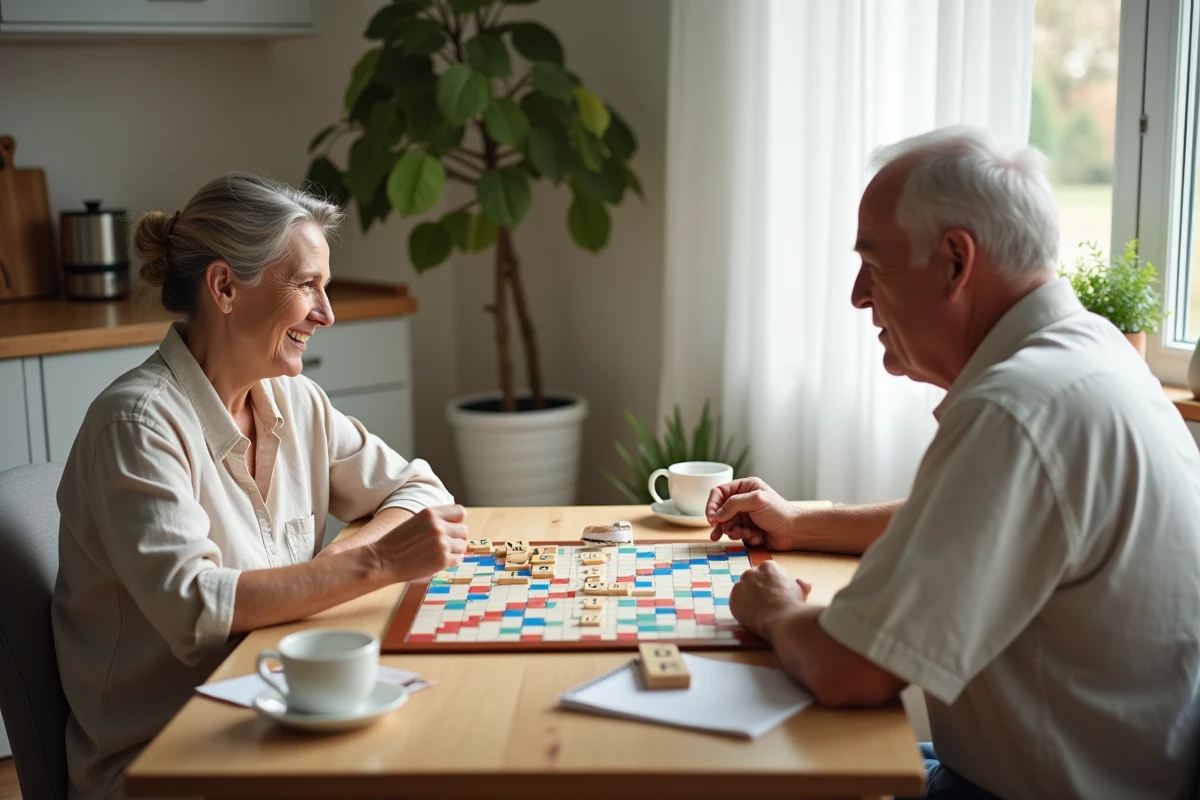
Two-letter words to know in Scrabble: beyond IN
IN is part of a small group of two-letter words validated by ODS 8. Knowing them all radically changes the way to play, as they serve as connectors between the words placed on the board.
Two-letter words containing high-value letters are the most profitable. Among the combinations that casual players often forget:
- QI (Q at 8 points, no U required), probably the most valuable two-letter word in the game
- WU (W at 10 points), rarely known outside competitive circles
- XI and EX, which allow placing the X (worth 10 points) on multiplier squares
- KA (K at 10 points), useful when no long word absorbs the K from the draw
Francis Desjardins, world champion of classic Scrabble, and Quentin Mallégol, his successor to the world title, both emphasize the memorization of these short words as the foundation for any progress in Scrabble.
Checking the validity of a word: ODS 8 and club practice
The Official Scrabble Dictionary (ODS 8) remains the reference for francophone Scrabble. Any word absent from this lexicon is rejected in competition, regardless of its common usage in spoken language. This is a frequent point of friction between casual players and club players.
GIN and IN are clearly included. However, some recent conjugated or derived forms (from the ODS 8 update) are not yet integrated into public applications or free online dictionaries. Checking in ODS 8 before contesting a word avoids unnecessary penalties.
The next time your opponent places IN on a triple word score square crossing three perpendicular words, you will know that this little two-letter word is worth every point it scores.