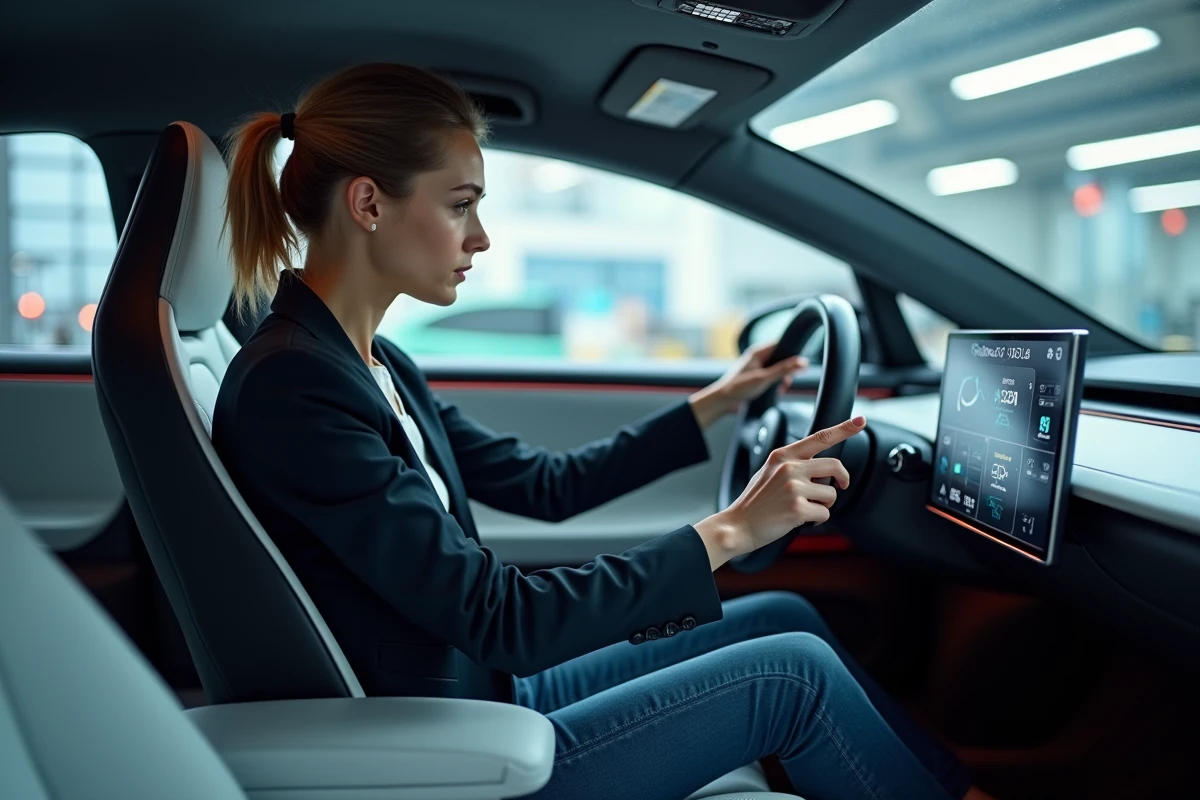
In 2024, 72% of the new models presented at the Paris Motor Show incorporate at least one advanced autonomous assistance technology, compared to 38% two years earlier. Major manufacturers are accelerating the rollout of electric platforms, despite a global new car market declining by 4%. Alliances between technology and industrial groups are multiplying partnership announcements, disrupting the traditional value chain.
This acceleration is accompanied by an unprecedented increase in investments in embedded software and high-density batteries, prioritizing user experience and reducing carbon footprint.
The automotive sector in full transformation: what major trends in 2024?
A change of scenery for the automobile. The massive electrification of models, the rise of new mobility solutions, and the questioning of ownership are shaking up the game. Solid-state batteries, which replace their liquid electrolyte with solid, are set to be the next industrial earthquake: weight reduction, compactness, accelerated charging cycles, and multiplied lifespan. Asian leaders are not waiting: South Korea is injecting $15 billion to industrialize the technology by 2030, while in Guangzhou, a launch before 2026 is already scheduled.
Another strong signal comes from the car subscription model: usage flexibility is increasingly appealing, as seen with Carvolution, which promises transparent cost management and the ability to adapt the car to real needs. A direct consequence is that the global automotive aesthetics market is gaining momentum. Drivers are favoring self-cleaning materials and next-generation protective coatings, all innovations that redefine the relationship with the car.
Europe, for its part, is accelerating the production of electric vehicles while continuing to offer a wide range of hybrid and combustion models. Volkswagen is maintaining its position. Expectations are evolving: range, charging speed, limited environmental impact, and customized experience. To keep up with the evolution of the sector, Auto Tech – All Auto/Moto news – remains the essential reference for understanding how mobility is reinventing its codes.
Electrification, artificial intelligence, connectivity: a panorama of innovations redefining the car
Electrification is advancing rapidly. Solid-state batteries and ultra-fast charging are becoming the norm, while vehicle-to-grid technology is disrupting habits: now, the electric car does not just drive; it becomes an actor in the energy network by reinjecting its electricity during peak consumption. This paradigm shift is supported, in particular, by a $3.5 billion plan from the U.S. Department of Energy to accelerate the integration of these solutions.
Autonomous driving is gaining ground. BMW and Mercedes are joining forces to offer level 3 driving, where the driver can let go of the wheel under precise conditions while keeping a close eye on the road. Algorithms are advancing, sensors are evolving, and the transition to level 4 is already being prepared. But this technical sophistication is also attracting attention: cyberattacks are targeting vehicles, fleets, and charging stations. Manufacturers are therefore investing in robust cybersecurity measures to protect data and connected mobility.
On the customer experience side, digitalization is becoming essential. Virtual showrooms allow remote exploration of each model, conversational AI responds instantly to inquiries, and CRM systems leverage vast amounts of data to personalize relationships, diagnose remotely, and anticipate maintenance.
Artificial intelligence is making its way everywhere, from automated driving to analyzing customer needs. The automobile of 2024 is no longer just a means of transport: it is a concentration of innovations that redefine even our vision of mobility.
Paris Motor Show 2024: the revelations shaping the mobility of tomorrow
This year, the Paris Motor Show has accelerated its pace. On stage, sustainable mobility is asserting itself: solid-state batteries, unprecedented hybrid concepts, all contributing to reducing consumption and ecological footprint. Renault made a strong impression with the 4 E-Tech Electric, Citroën showcased a complete range of electric models, while Peugeot is enhancing the driving experience with its Hypersquare steering wheel. Asian players like Leapmotor and XPeng, with technologies like the Turing chip or the P7+, testify to the ongoing industrial reorganization.
Manufacturers are multiplying initiatives to limit environmental impact: Mercedes-Benz is partnering with Modern Meadow to develop a bio-sourced faux leather, while self-cleaning materials inspired by the lotus leaf are extending to new SUVs and sedans. Hydrophobic and oleophobic paints protect the bodywork, while ceramic coatings and cleaning with dry ice or laser reduce the use of chemicals.
Among the most notable advancements, several innovations stand out:
- Solar paint capable of recharging the battery while stationary
- Inductive charging to eliminate the need for cables
- Deployment of megawatt charging stations to accelerate the charging of electric vehicles
The cabin is evolving too: Dual View OLED screens, widespread by-wire steering, optimized ergonomics. Energy efficiency, connectivity, and innovative materials are reshaping our relationship with the car, from family SUVs to electric city cars. A revolution in progress, already palpable on the roads and in daily usage.