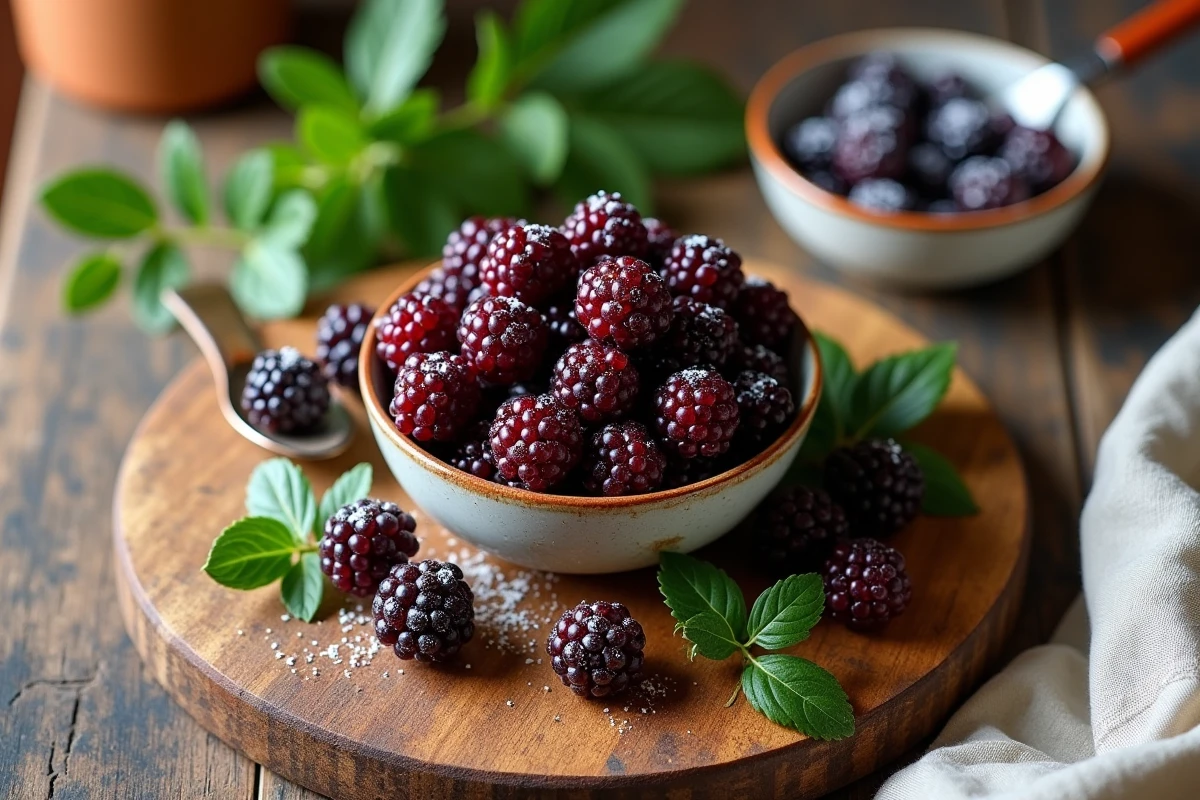
The plane tree mulberry (Morus kagayamae) produces elongated drupes that transition from green to red, and then to deep black when ripe. These juicy fruits, halfway between blackberry and elderberry in texture, offer a sweet flavor enhanced by a slight acidity. Their culinary use remains underexplored in France, even though they lend themselves to various preparations, from raw to cooked.
Taste profile of plane tree mulberries and difference with blackberry
The confusion between the mulberry and blackberry (Rubus fruticosus) persists. Their appearance is vaguely similar, but the resemblance stops there. The blackberry grows on a thorny, sprawling shrub. The plane tree mulberry falls from a tree that can reach several meters in height, and its shape is more elongated.
In the mouth, the difference is clear. The mulberry is sweeter and less acidic than the blackberry. Its flesh is more watery, almost melting, with an aftertaste that vaguely resembles fresh fig. This pronounced sweetness makes it a fruit that stands on its own, without the need for added sugar.
Preparing edible plane tree mulberries in the kitchen requires taking into account their high water content: long cooking concentrates the flavor but significantly reduces the volume.

White mulberries as a sugar alternative in recipes
Among the mulberry varieties, the white mulberry (Morus alba) deserves special attention in the kitchen. Its fruits, ranging from cream white to pale pink, develop an even more pronounced sweetness than those of the black plane tree mulberry. Content creators specializing in plant-based cuisine use these white mulberries as a natural alternative to refined sugar.
The most direct application: smoothies and raw desserts. The crushed pulp of white mulberries provides enough sweetness to replace honey or agave syrup in a recipe for compote, nice cream, or jam without added sugar. The result maintains a light color and a delicate flavor, less pronounced than that of black mulberry jam.
Mulberry jam without added sugar
The technique relies on slow cooking. White or black mulberries, cooked over low heat, release their natural pectin. The mixture thickens without industrial gelling agents, provided the cooking is prolonged until a coating consistency is achieved.
For the black plane tree mulberries, the slight acidity compensates for the absence of added sugar and provides a more interesting balance in the mouth than with a fruit that is solely sweet. Adding a splash of lemon juice at the end of cooking stabilizes the color and enhances the aromas.
Edible mulberry leaves: an underappreciated use in Europe
Articles about mulberries focus almost exclusively on the fruits. However, the leaves are a food in their own right in Asian tradition, where they have been consumed for centuries, well beyond their historical role as food for silkworms.
In Europe, mulberry leaves are beginning to appear in the form of herbal teas or powder incorporated into culinary preparations. The dried and infused leaf produces a sweet, slightly herbal drink, without bitterness. Ground into fine powder, it can be added to pancake batters, green smoothies, or sauces to provide an original plant-based touch.
Fresh leaves, picked in spring when they are still tender, can be consumed in salads or used as cooking wrappers (similar to grape leaves). The dense foliage of the plane tree mulberry provides an abundant raw material throughout the beautiful season.
Urban foraging of plane tree mulberries: practical precautions
The majority of plane tree mulberries in France are urban alignment trees. This is both an advantage (easy access) and a risk. The fruits absorb atmospheric pollutants, and a tree by the roadside does not offer the same quality as a garden tree.
- Avoid trees located within a few meters of a busy road, where fine particles and heavy metals settle on the fruits
- Prefer mulberries from parks, private gardens, or pedestrian areas, away from traffic
- Only pick black, soft-to-the-touch fruits that detach easily from the branch: green or red fruits are not ripe and may cause digestive issues
- Wash thoroughly with clear water before consumption, even for garden fruits
Another rarely mentioned point: the spread of sterile varieties of plane tree mulberry in recent urban plantings. These cultivars, chosen to avoid fruit stains on sidewalks, do not produce mulberries. Spotting a fruit-bearing mulberry in the city is becoming increasingly difficult, especially in recently redeveloped neighborhoods.
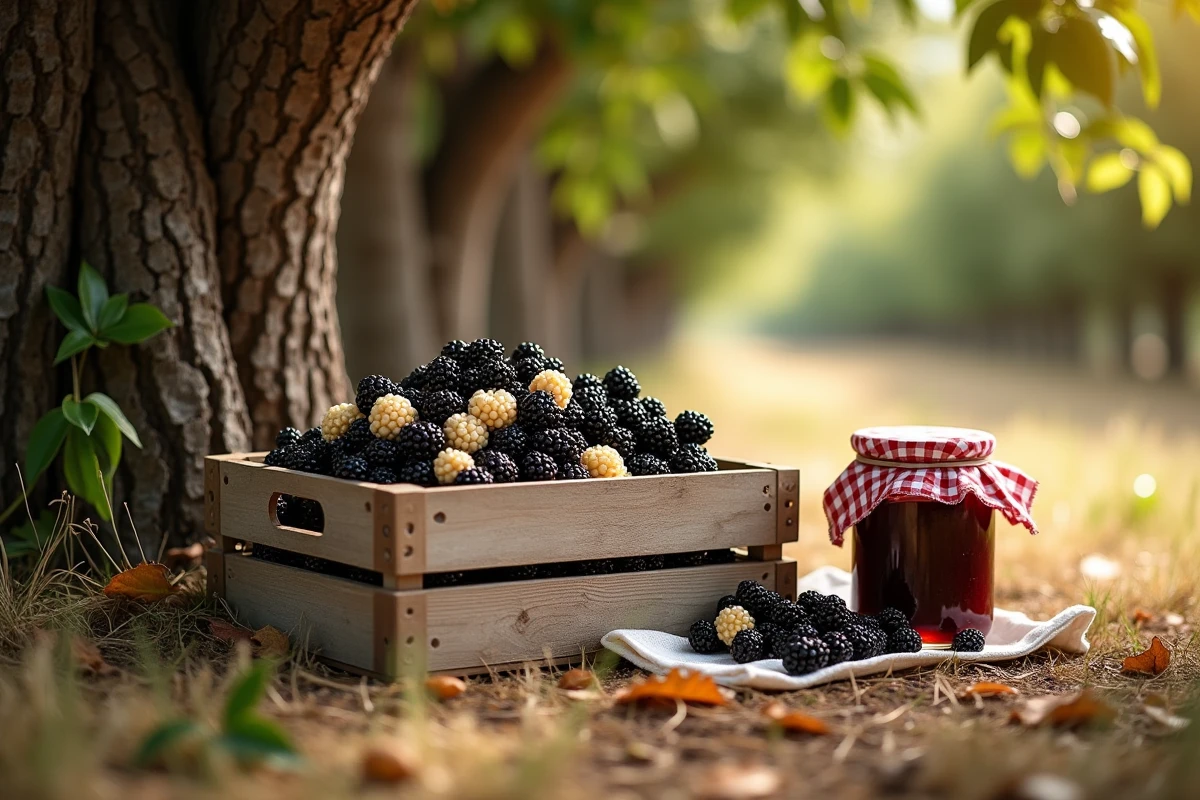
Three quick preparations with plane tree mulberries
The fruit is ideally consumed raw, plain, within minutes of picking. Its shelf life is very short: the flesh crushes and ferments quickly at room temperature.
- Express coulis: blend black mulberries with a splash of lemon, strain to remove the small seeds, pour over yogurt or panna cotta
- Mulberry vinegar: let the fruits macerate in apple cider vinegar for two to three weeks, strain, use in salad dressings or for deglazing meat
- Sorbet without an ice cream maker: freeze the mulberries spread on a tray, then blend them while still frozen with a spoonful of honey until a creamy texture is achieved
The fruit’s fragility explains why it never appears on market stalls. The entire chain, from picking to plate, takes place within a few hours. This constraint also adds to its charm: plane tree mulberries remain a local foraged product, impossible to industrialize, rewarding those who pass by at the right time under the right tree.