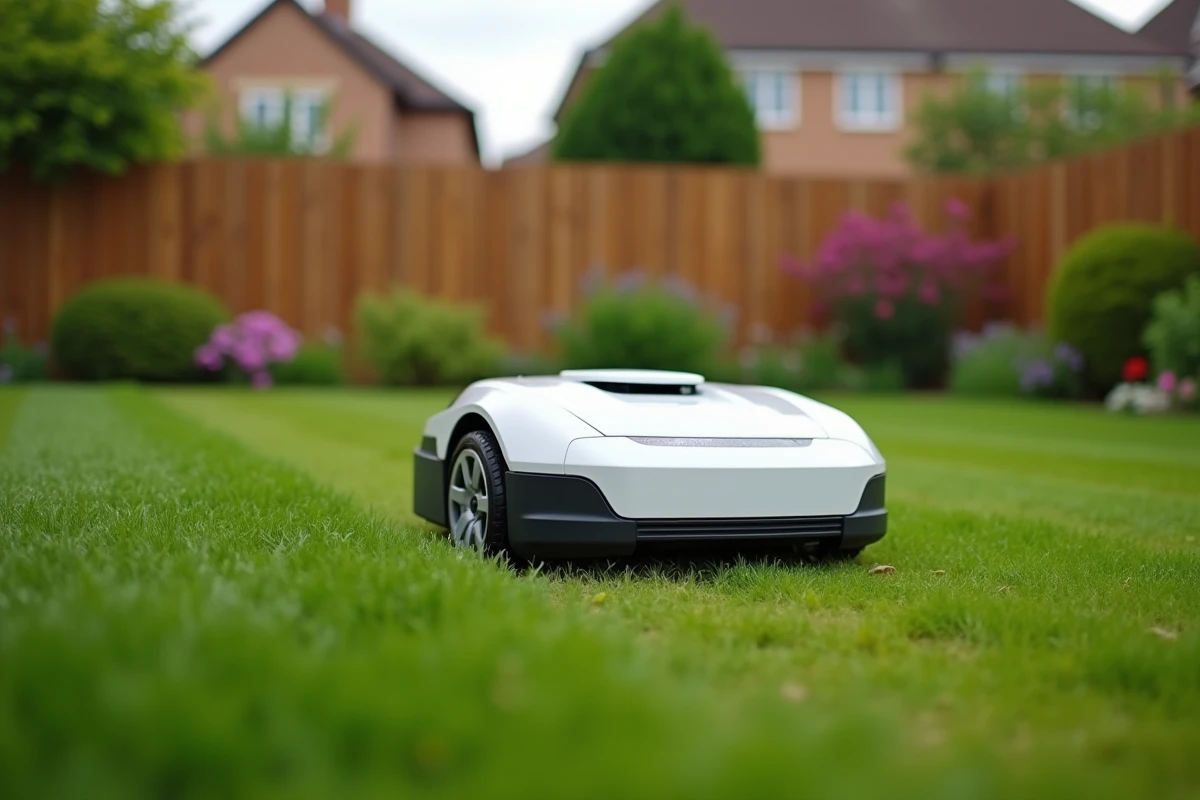
A plot of 800 m² with a 20% slope and two island flower beds in the middle of the lawn: this is the kind of configuration that turns the choice of a robotic lawn mower into a puzzle. When a dealer offers free installation, we often focus on the displayed price. The real issue is what the machine costs over five to seven years, including maintenance.
Perimeter wire or wireless guidance: the total cost over five to seven years
The value of free installation varies depending on the technology of the robot. With a perimeter wire model (classic Husqvarna Automower, Gardena Sileno), free installation represents a real saving: digging a trench, burying the guide wire over several hundred meters, and connecting the charging station easily takes half a day for two technicians.
The problem arises afterward. A wire cut by a spade, a scarifier, or a rodent means a repair intervention every time. Over five years, the repair costs for the buried wire can exceed the initial installation cost. Add the replacement of blades (multiple times per season) and the battery after a few years, and the bill rises significantly.
Wireless perimeter robots (GPS, vision, or RTK guidance, like some Segway Navimow or Mammotion models) eliminate this expense. No trench, no wire to repair. The installation is quicker, which explains why dealers easily include it in the catalog price. Over time, a wireless robot generates fewer unexpected costs related to ground infrastructure.
People often compare the price of a robotic lawn mower with installation by only looking at the label. It’s better to add the purchase price, annual consumables, and likely repairs to get the actual usage cost.
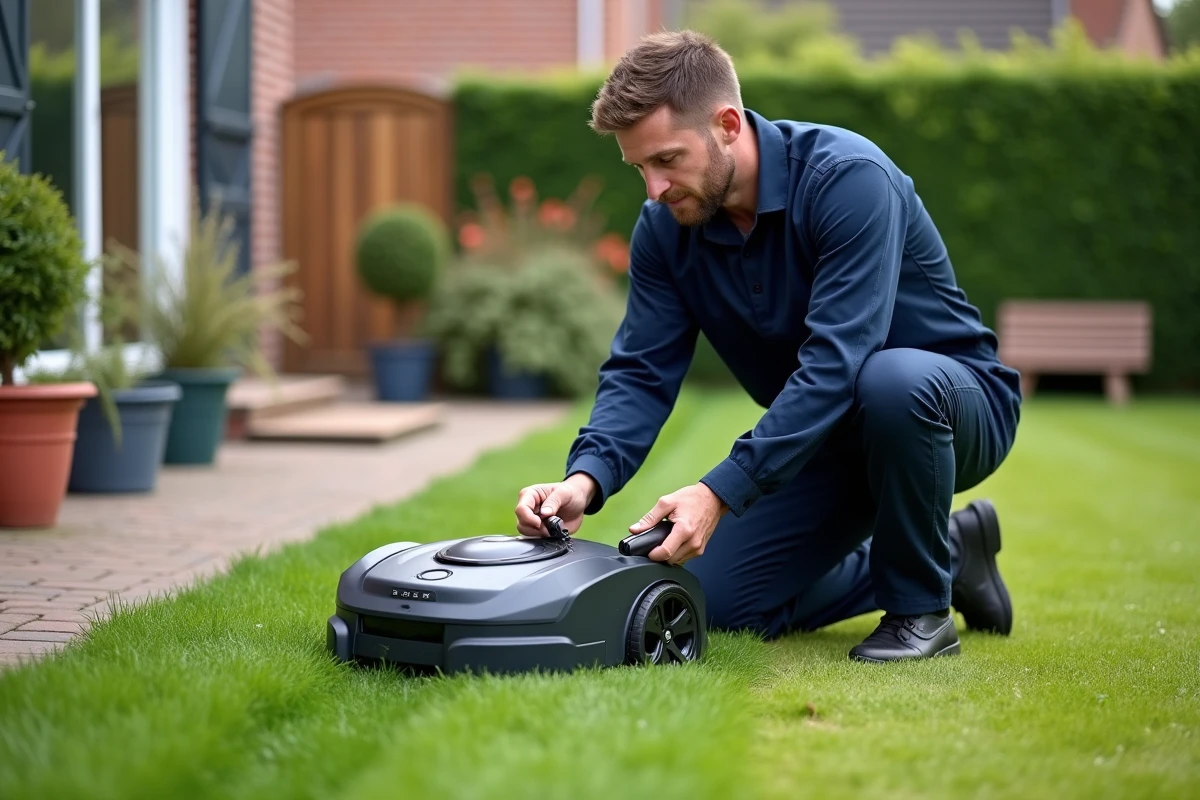
Robotic lawn mower with free installation: what the package really includes
Behind the mention of “free installation,” the content of the service varies from one distributor to another. Before signing, check what is covered.
- The installation of the perimeter wire and guide wire (if the model uses one), with burying or securing to the ground with staples, configuration of exclusion zones around the flower beds and borders.
- The initial programming of the robot: setting mowing schedules, connecting to the mobile app, adjusting the cutting height suitable for the type of lawn.
- The functionality test on the ground: checking the return to the charging station, behavior on slopes, obstacle detection.
- For wireless models, GPS calibration or mapping by the robot itself, which may require several passes before becoming operational.
What is often missing from the free package: annual maintenance, blade replacement, winterization, and restarting in spring. Some distributors now offer all-inclusive subscriptions with maintenance and replacement in case of breakdown, based on a monthly fee. This model radically changes the calculation, as you are no longer comparing a purchase price but a monthly usage cost that includes equipment, installation, and maintenance.
Land area and slope: adapting the model to the actual garden
A robot designed for a maximum area rarely reaches this capacity on uneven terrain. Slopes, narrow passages between two flower beds, and shaded areas where grass grows less quickly alter the actual needs.
Slopes and topology
The slope crossing capacity differs between models. High-end robots like Husqvarna or Segway can climb steeper slopes than entry-level models. If the terrain has marked elevations, this is a priority selection criterion, not a secondary detail.
Battery autonomy
A complex terrain puts more demand on the battery: the robot maneuvers more and returns to the base more often. It’s better to oversize the advertised area compared to the actual area to maintain regular mowing without the robot spending its day recharging.
Feedback varies on this point depending on the brands: some users report that the actual capacity falls significantly below the advertised area as soon as the terrain has more than two distinct zones.

Maintenance of the robotic lawn mower: anticipated expense items
Maintenance determines the longevity of the robot and the actual annual cost. Three expense items consistently come up.
The cutting blades need to be replaced several times per season on most models. They are inexpensive consumables individually, but the frequency of replacement adds up. Some robots use rotating blade discs (Husqvarna), while others use more robust fixed blades.
The lithium-ion battery loses capacity over charge cycles. After a few years of intensive use, its replacement represents a significant expense. This is a parameter that all-inclusive subscription packages absorb, unlike traditional purchases.
Cleaning the chassis, checking the wheels and sensors, and winterizing complete the program. Nothing complex, but neglecting these steps shortens the machine’s lifespan and can lead to costly breakdowns.
The choice of a robotic lawn mower with free installation rarely plays out at the time of purchase. It’s the cumulative cost over several seasons, including maintenance and repairs, that distinguishes the technologies. A wireless perimeter model with a simplified package and little recurring maintenance can prove more economical than a wired robot whose free installation hides regular costs.
Adapting the model to the actual area, the slope of the terrain, and the annual operating budget remains the most reliable method for making the right choice.